
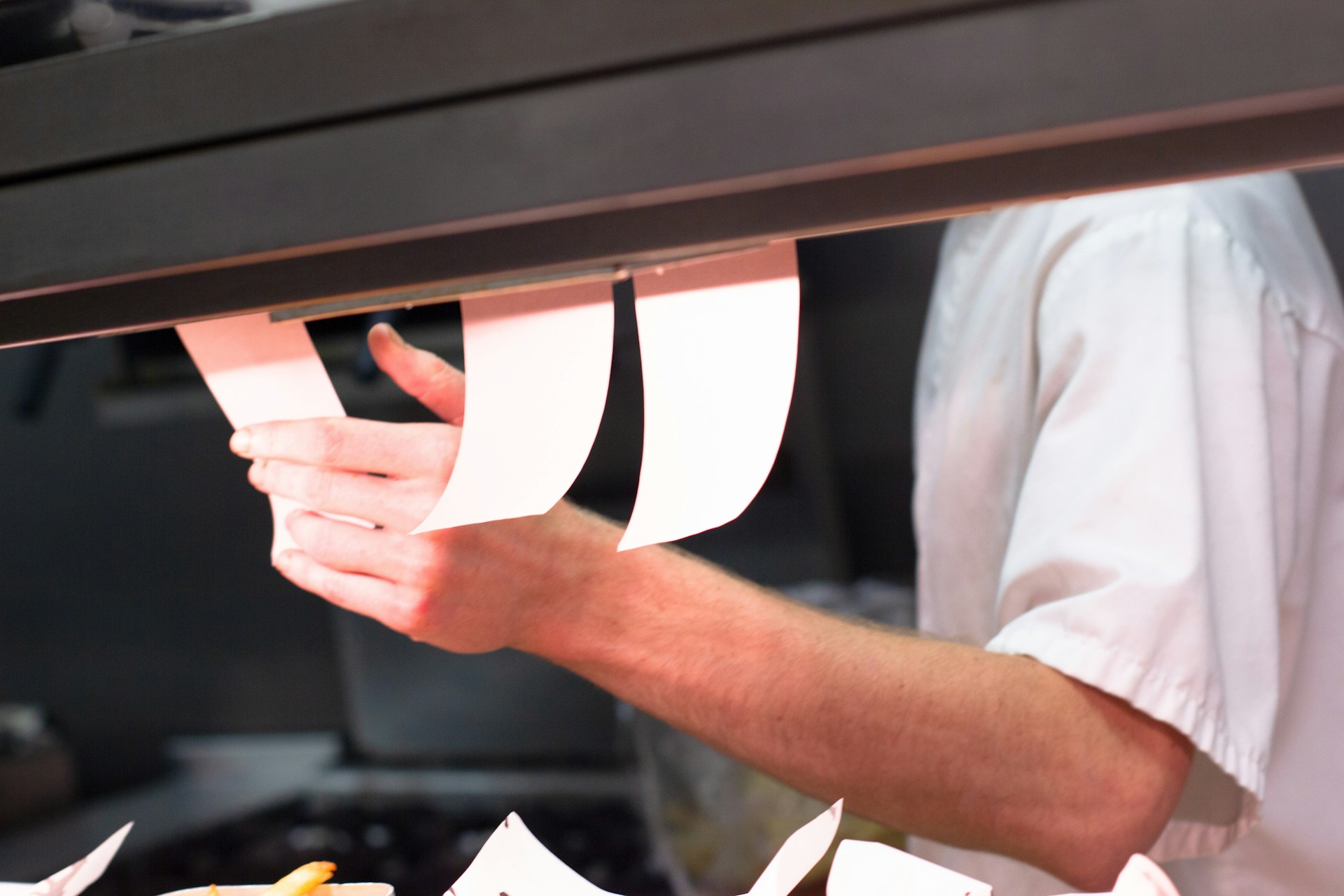
Service quality is often judged in moments so small they are easy to overlook: the seconds between plating and pickup, the calm or confusion at the pass, the awkward delay when a dish sits ready but nobody knows it. A well-designed Food Ready Alert System addresses that exact gap. More than a bell or a buzz, it creates a cleaner handoff between kitchen and floor staff, helping restaurants protect food quality, tighten service rhythm, and reduce needless shouting across the line.
What a Kitchen Calling System Actually Does
A kitchen calling system is built to solve a simple operational problem: how to notify the right person, at the right moment, that an order is ready to move. In busy restaurants, cafés, cloud kitchens with pickup counters, and food courts, verbal communication often breaks down under pressure. Steam, noise, multiple tickets, staff movement, and split responsibilities all create opportunities for delay.
A Food Ready Alert System introduces structure into that handoff. When the kitchen marks an order ready, the alert is sent through sound, light, display, or pager-based notification. That means fewer missed calls, less crowding near the kitchen pass, and better timing between plating and delivery. The value is not only speed. It is consistency. A good system gives the team confidence that prepared food will not wait unnoticed while staff are handling other tables or service tasks.
In practical terms, these systems are especially useful where service depends on fast turnover and clear coordination. That includes:
- Full-service restaurants with active dining rooms
- Quick-service counters and self-pickup models
- Cafés managing dine-in and takeaway simultaneously
- Food courts where guests need reliable paging
- Banquet and event operations with multiple service zones
Why a Food Ready Alert System Matters on the Floor
The strongest service systems are rarely dramatic. They remove friction quietly, allowing staff to focus on hospitality rather than chasing information. That is where the Food Ready Alert System earns its place. It shortens the distance between preparation and delivery, but it also reduces the noise and stress that can make a restaurant feel disorganized behind the scenes.
When a plate is ready, the priority is not simply informing someone that food exists; it is making sure the right runner or server responds quickly. A reliable alert system helps preserve temperature, presentation, and pacing. Hot dishes are less likely to cool at the pass. Cold items are less likely to soften or separate. Guests receive courses in a more orderly sequence. Servers spend less time hovering near the kitchen waiting for updates that may or may not come.
For operators comparing practical service tools, a dedicated Food Ready Alert System can be especially helpful when the dining room is spread out, the kitchen is partially enclosed, or the service team rotates between tables, billing, and pickup points.
The everyday benefits are easy to recognise:
- Better timing: dishes leave the pass sooner, which protects both taste and presentation.
- Less verbal clutter: staff no longer need to rely on repeated shouting or guesswork.
- Clearer accountability: alerts make it easier to know when a handoff should happen.
- Improved guest experience: smoother pacing feels more professional, even when the restaurant is busy.
- Stronger team flow: kitchen and floor work as connected parts of one system rather than separate worlds.
Where These Systems Deliver the Most Value in India
Restaurant environments in India often demand a high level of adaptability. Operators may be balancing dense service periods, multi-floor seating, mixed family and group dining, takeaway counters, and tight back-of-house space. In such settings, communication tools are not a luxury; they are part of disciplined service design.
A kitchen calling system can be particularly effective where visibility is limited. If servers cannot easily see the pass, or if guests are collecting orders from a waiting zone, alert-based communication reduces confusion. It also supports restaurants that need a more polished atmosphere. A dining room feels calmer when staff do not need to constantly call into the kitchen or interrupt guest interactions to check order status.
Businesses looking for waiter calling and guest paging systems in India often consider specialists such as DineBellSolution, especially when they want equipment suited to hospitality use rather than improvised notification methods. The advantage of choosing a hospitality-focused provider is not only the device itself, but the logic behind it: simple alerts, quick response, durable operation, and minimal training barriers for staff.
This matters across formats:
- Family restaurants: smoother handoff during peak lunch and dinner service
- Quick-service venues: faster customer collection without chaotic counter queues
- Fine dining rooms: discreet communication that protects ambience
- Hotels and banquets: better coordination across larger service areas
- Food courts and pickup counters: clearer guest paging with less crowding
What to Look for in a Kitchen Calling System
Not every system suits every operation. The best choice depends on the size of the venue, the service model, and the way staff already move through the space. A small café may need something straightforward and compact, while a larger restaurant may require multiple alert points, paging units, or clearer zone control.
When evaluating options, the smartest approach is to think operationally rather than cosmetically. Ask what problem the system must solve, who needs to receive the alert, and how quickly staff can act once they do.
| Feature | Why It Matters | What to Prioritise |
|---|---|---|
| Audible and visual alerts | Different environments require different types of notice | Alerts that are easy to notice without disturbing guests |
| Range and signal stability | Weak communication defeats the purpose of the system | Reliable coverage across kitchen, floor, and pickup areas |
| Ease of use | Complicated systems slow adoption during busy service | Simple controls that staff can learn quickly |
| Durability | Hospitality environments involve heat, spills, and constant use | Robust devices designed for commercial handling |
| Scalability | Operations often expand or change workflow over time | Systems that can adapt to added tables, counters, or zones |
A useful selection checklist includes the following points:
- Map the path from kitchen completion to food handoff
- Identify where communication currently fails or slows down
- Decide whether staff alerts, guest paging, or both are required
- Check whether the system suits your noise level and layout
- Confirm that setup and daily use are straightforward for the team
Building Better Service from the Pass to the Table
Restaurant efficiency is often discussed in broad terms, but guests experience it through very specific details: food arriving at the right temperature, servers appearing informed rather than uncertain, and the room feeling composed even during the rush. A kitchen calling system supports those outcomes because it fixes one of the most common weak points in service: the moment between readiness and response.
The real strength of a Food Ready Alert System is that it respects both sides of hospitality. It helps the kitchen protect what it has prepared, and it helps the floor team deliver with better timing and less friction. That combination improves not only speed, but also the overall feel of service. Restaurants become quieter, clearer, and more dependable in the moments that matter most.
For operators who want a more disciplined service flow, investing in the right communication system is a practical decision rather than a decorative one. Whether the need is waiter calling, guest paging, or tighter coordination between kitchen and dining room, the best results come from choosing a solution that fits the reality of daily service. In that context, a thoughtfully chosen Food Ready Alert System can make the difference between a rushed operation and a restaurant that feels confidently in control.
For more information on Food Ready Alert System contact us anytime:
Waiter Calling System For Restaurant & Cafe | Dinebellsolution
https://www.dinebellsolution.com/restaurant-wireless-calling-system
+919725658642
Ahmedabad, Gujarat
Revolutionize your restaurant with our advanced wireless waiter calling system & pager system. Enhance service efficiency and streamline operations in India By Dine Bell Solution


