
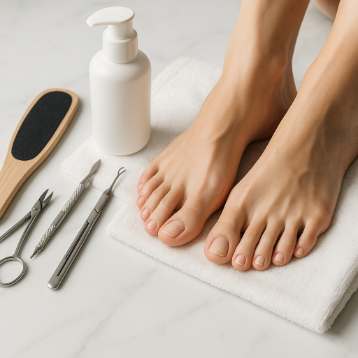
Healthy feet rarely demand much attention until discomfort, irritation, or visible problems appear. That is why hygiene deserves far more respect in foot care than it often receives. Clean hands, disinfected tools, fresh linens, and a careful eye for skin condition are not minor details; they are the basis of safe and responsible treatment. In Fußpflege für Einsteiger, these habits matter even more, because beginners tend to focus on visible results while underestimating the quiet discipline that prevents avoidable issues.
Why hygiene is the real foundation of foot care
Feet spend long hours in warm, enclosed environments, often under pressure and friction. That combination makes them especially vulnerable to sweat buildup, odor, rough skin, fungal problems, and small cracks that can worsen when neglected. Once the skin barrier is compromised, even simple grooming can become uncomfortable or risky if hygiene standards are poor.
Good hygiene in foot care protects both appearance and skin integrity. It reduces the chance of transferring bacteria or fungi from one area to another, limits irritation after exfoliation or nail trimming, and helps the practitioner notice early warning signs instead of covering them up. Hygienic practice also improves results. Moisturizers absorb better on clean skin, trimming is more precise with sanitized tools, and the overall treatment feels more controlled and professional.
Most importantly, hygiene creates judgment. Clean practice is not only about wiping surfaces or washing hands. It means knowing when not to proceed. Broken skin, inflamed nail folds, suspicious discoloration, strong odor, or signs of infection are cues to pause rather than continue with routine cosmetic care.
What Fußpflege für Einsteiger should master before technique
Beginners often assume that foot care starts with soaking, filing, or polishing. In reality, it starts much earlier. A hygienic routine begins before any treatment touches the foot. Anyone building confidence in safe basics can benefit from structured guidance such as Fußpflege für Einsteiger, especially when hygiene standards are treated as part of technique rather than an afterthought.
The first priority is preparation. Hands should be washed thoroughly before and after treatment, and any cuts on the hands should be covered. The workspace should be clean, dry, and uncluttered. Towels must be freshly laundered, bowls must be properly cleaned, and tools should be sanitized according to their material and use. Reusing disposable items or relying on a quick rinse is not enough.
Before beginning, the feet should be visually checked. Look for open cracks, blisters, redness, swelling, or nail changes. A gentle inspection can prevent painful mistakes later. If there is any concern about infection or a medical condition, cosmetic care should be postponed in favor of professional assessment.
A simple hygienic workflow helps beginners avoid rushed or careless handling:
- Prepare the area: clean the surface, lay out fresh towels, and organize tools so nothing unclean touches the treatment zone.
- Wash and inspect: clean the feet gently and examine skin and nails before deciding what is safe to do.
- Use sanitized tools correctly: trim carefully, file in a controlled way, and avoid aggressive removal of skin.
- Protect the skin: apply suitable products with clean hands or clean applicators.
- Finish properly: clean tools again, dispose of single-use items, and leave the area dry and tidy.
When this order becomes habitual, hygiene stops feeling like an extra step and becomes the structure of the entire service.
Tools, surfaces, and products: where hygiene often breaks down
Many hygiene failures happen not during the visible treatment, but in the handling of ordinary items. Nail clippers, files, foot basins, pumice tools, towels, creams, and even work surfaces can all become points of contamination if managed carelessly. The safest approach is to separate what is disposable, what is reusable, and what must never be shared without proper cleaning.
Reusable metal tools generally allow more thorough sanitation than porous tools or worn accessories. Items that trap moisture or skin residue should be replaced regularly. Cream jars also require care; dipping fingers into product repeatedly can compromise cleanliness, especially in shared settings. A spatula, pump dispenser, or single-use portion is often the better choice.
| Item | Best hygiene practice | Key risk if neglected |
|---|---|---|
| Metal clippers and nippers | Clean thoroughly and sanitize after every use | Transfer of bacteria or fungi |
| Foot files and pumice tools | Replace when worn and keep fully dry between uses | Moisture retention and residue buildup |
| Towels | Use freshly laundered towels for each session | Cross-contamination and odor |
| Foot basins | Wash and disinfect after every treatment | Contaminated soaking water and surfaces |
| Creams and balms | Use clean applicators or dispensers | Product contamination |
Even small details matter. A wet towel left folded, a file stored before drying, or a cream lid handled with unwashed hands can undermine an otherwise careful routine. Hygiene is often won or lost in these small decisions.
Common mistakes beginners make in hygienic foot care
In Fußpflege für Einsteiger, mistakes usually come from enthusiasm rather than neglect. People want smooth heels, neat nails, and visible improvement, so they work too quickly or too aggressively. Yet hygiene demands patience and restraint.
- Soaking too long: overly softened skin can be harder to judge accurately and easier to damage.
- Using tools on compromised skin: cracks, blisters, and inflamed cuticles should not be treated as ordinary roughness.
- Sharing tools casually: even among family members, shared files or clippers can spread problems.
- Ignoring drying: moisture left between the toes encourages irritation and unwanted growth.
- Over-filing callused areas: removing too much skin at once can create tenderness and fresh vulnerability.
- Confusing fragrance with cleanliness: scented products do not replace proper washing and sanitation.
Another common mistake is treating hygiene as a one-time setup rather than a consistent standard. A clean tool on one day is not a clean tool forever. Hygiene is repetitive by nature, and that repetition is exactly what makes it protective.
Conclusion: hygiene gives foot care its value
Beautifully groomed feet mean little if the process behind them is careless. Hygiene is what turns foot care from a cosmetic routine into a safe, thoughtful practice. It protects the skin, improves comfort, supports better results, and helps identify when professional advice may be needed instead of further treatment.
For anyone exploring Fußpflege für Einsteiger, the most important lesson is simple: clean practice comes first. Learn how to prepare properly, inspect carefully, sanitize consistently, and work with restraint. Technique can always improve with time, but hygiene must be present from the beginning. When those standards are respected, foot care becomes not only more polished, but far more responsible.
To learn more, visit us on:
Beauty Academy | Kosmetikausbildung Österreich
https://www.beauty-ausbildung.at/
0680-3328198
8430 Leibnitz, Augasse 17
Unlock your potential in the world of beauty with Beauty Academy | Kosmetikausbildung Österreich. Dive into professional training programs that are both state-recognized and hands-on, offering courses in cosmetology, foot care, makeup artistry, and nail design. With flexible course models tailored to fit your lifestyle, our academy is your gateway to mastering the art of beauty. Transform your passion into a profession and join a community of aspiring beauty experts today!


